
New Analysis Finds Ongoing Market Distortions Drive Electricity Costs Higher for Ohio, PJM Consumers Every Year
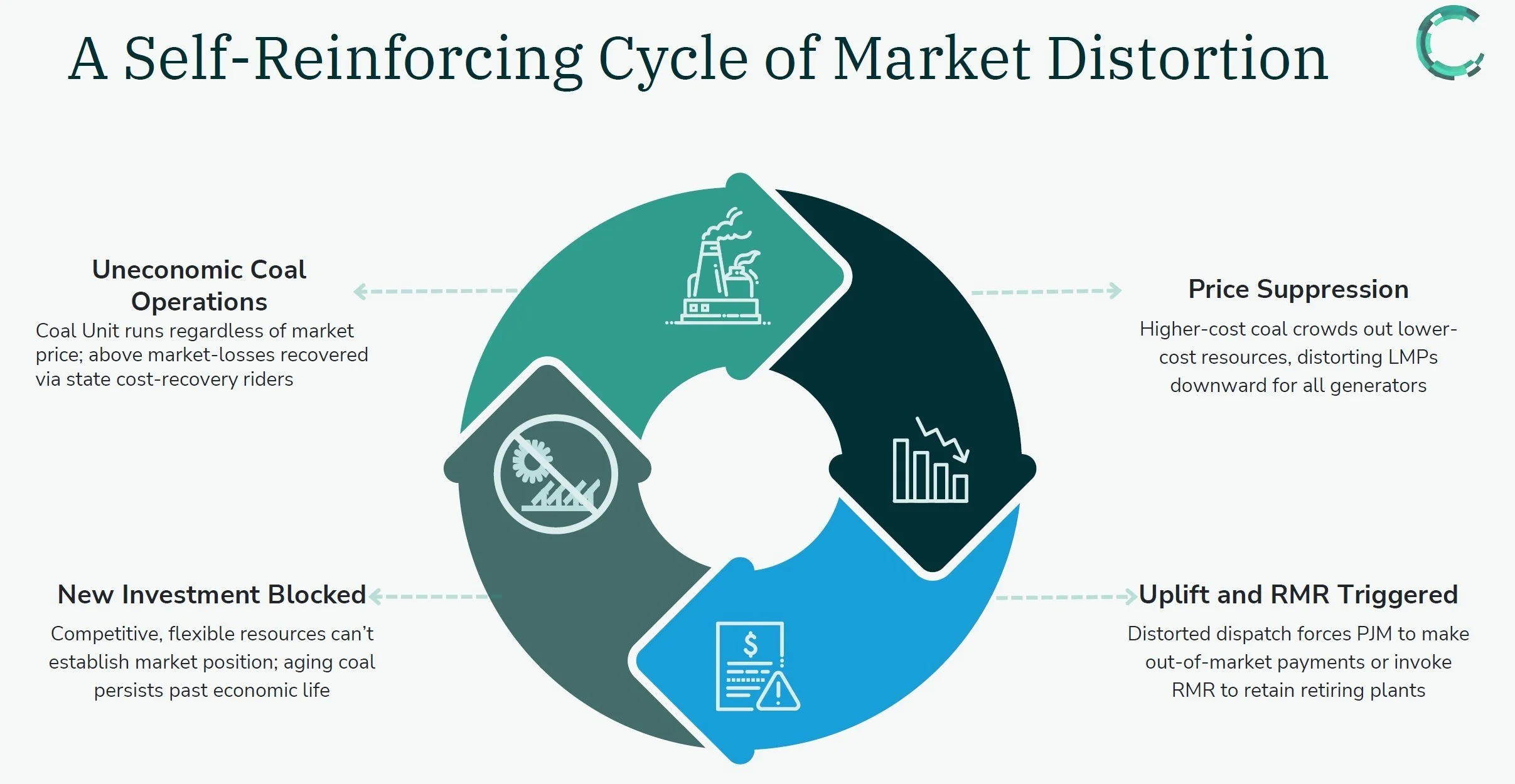
A self-reinforcing cycle of market distortion: uneconomic dispatch for aging coal plants across PJM.
Cost increases estimated at $786 million in one year alone
June 15, 2026
COLUMBUS, OH—The Citizens Utility Board of Ohio today released a new independent report examining how, despite the end of Ohio’s OVEC subsidies, certain market-distorting practices by power plant operators within the PJM regional electricity market are increasing costs for electricity consumers every year. As electricity prices continue to increase, CUB Ohio cautioned that affordability and transparency must be prioritized just as much as reliability by grid planners and operators and that preventable cost increases from power plant operations should not be passed along to consumers’ monthly bills.
Prepared by Current Energy Group, the report analyzes mechanisms that can allow power plants to continue operating despite market signals indicating lower-cost alternatives are available. The report presents data that indicates uneconomic coal operations in PJM resulted in approximately $786 million in excessive costs during 2024.
The report focuses on market transparency, consumer affordability, and competitive market outcomes rather than any individual facility or fuel source.
“Anti-competitive operation of power plants is increasing electricity costs for PJM consumers, including Ohioans, by millions of dollars every year,” said Tom Bullock, Executive Director of the Citizens Utility Board of Ohio. “These practices have been going on for years and are unnecessary outside of rare cases. If states and PJM work together, we can end these bad habits and save consumers money when they badly need it.”
The report examines several mechanisms that can contribute to uneconomic operations, including self-scheduling practices, uplift payments, reliability-related interventions, and other market distortions that can weaken competitive market signals and shift costs for money-losing power-plant operations to consumers.
According to the report, prolonged reliance on these mechanisms can suppress competition, delay the entry of lower-cost resources, and increase long-term costs for ratepayers.
“Competitive electricity markets are intended to achieve least-cost outcomes for customers, but systematic or persistent deviations undermine this objective,” said Dan Cross-Call, Director, Current Energy Group. “Understanding where and how the system departs from least-cost outcomes is the foundation for any meaningful regulatory or policy response, which, in turn, promotes competition and reduces prices for customers.”
“Unless we operate the PJM market with discipline and remove anticompetitive loopholes and workarounds that subsidize old, inefficient power plants, the market can’t do its job of selecting the most cost-effective suppliers and saving consumers money,” Bullock added. “Without change, we are operating the market with one foot on the accelerator and one foot on the brake. Consumers should not be forced to subsidize inefficiency.”
The report also highlights opportunities to improve transparency, strengthen accountability, and ensure that reliability solutions are implemented in ways that protect consumers.